
Here’s how to choose the best flooring for basements that feel like real living space, not just storage.
If your basement has turned into a TV room, playroom, home gym, or even a rental suite, the floor matters far more than it did when it was just a storage zone. It sets the tone, shapes how warm the space feels underfoot, and decides how much stress you take on every time someone spills a drink.
In Metro Vancouver, basements also wrestle with moisture, cool concrete slabs, and the odd surprise leak. That’s why so many homeowners ask our team what actually works day to day, not just what looks good in a showroom.
This guide walks through how luxury vinyl plank flooring for basement living spaces performs in local homes, what it does well, where it can disappoint, and when another material may fit better.

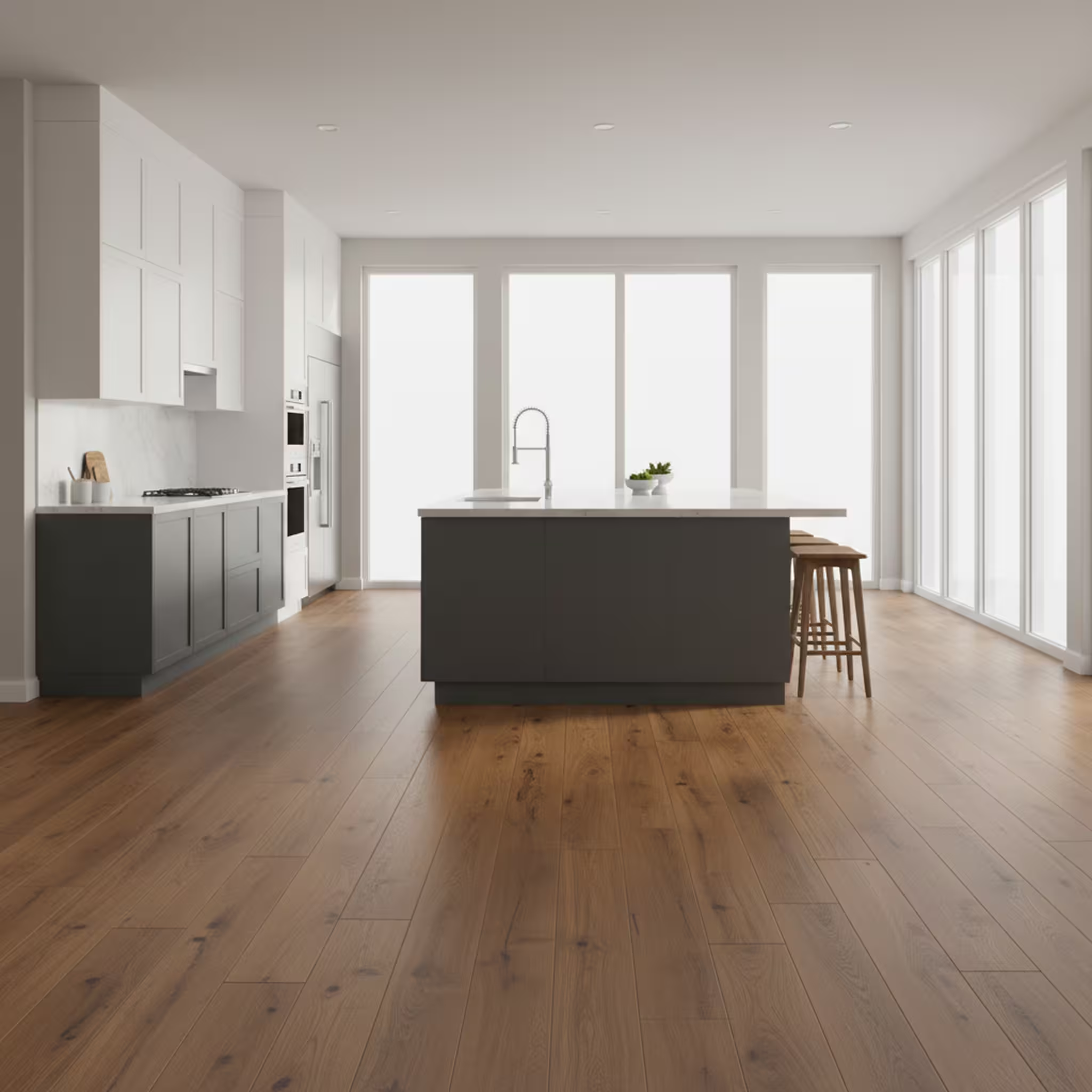
A finished basement living room with wood-look luxury vinyl plank shows how the right floor can make the space feel like a real living area.
TL;DR: quick answer
- For many Metro Vancouver homes, a well-installed luxury vinyl plank (LVP) over a properly prepared subfloor is a strong choice for finished basement living space.
- LVP handles everyday spills, kids, pets, and foot traffic better than laminate, feels warmer than tile, and needs less upkeep than carpet.
- It still needs a dry, tested concrete slab, flattening work, and the right underlay—otherwise you can run into buckling, gaps, or musty smells.
- Basements with ongoing water intrusion or floor drains may be better off with tile, sealed concrete, or a different system altogether.
What makes a good flooring for basement living spaces?
When you picture a finished basement, you might think about paint colours and furniture first. From our installer’s point of view, the checklist starts underneath your feet. A good flooring for basement living spaces needs to handle:
- Moisture and humidity: Concrete slabs can wick moisture from the ground. Flooring and underlay need to cope with that, not trap it.
- Cool temperatures: Bare concrete often feels several degrees cooler than the rest of the house, so you want materials that don’t feel icy in winter.
- Traffic and abuse: Basements take a beating from kids, guests, and storage. Scratches, pet claws, gym equipment, and rolling toys all show up here.
- Ceiling height: Many basements have limited headroom, which can rule out thick raised subfloors in some cases.
- Local building rules: If you’re building a secondary suite, you also need to meet fire, sound, and safety standards in the BC Building Code.
That’s why homeowners often end up shortlisting materials like vinyl plank flooring, laminate, carpet, and tile. Each can work in a basement—but only when matched to the way the space is used and what’s happening with the concrete beneath.
How luxury vinyl plank works in a basement
Luxury vinyl plank is a multi-layer floor that clicks together to float over your concrete or over a subfloor. Most products we install in basements have:
- a tough top wear layer that resists scratches and stains
- a printed vinyl layer that mimics wood or stone
- a rigid core (often SPC or WPC) that adds stability
- an attached underlay for sound and a bit of warmth

Proper installation of click-together luxury vinyl plank over a prepared basement slab is key to long-term performance.
“In most homes we visit, a well-installed luxury vinyl plank floor turns a chilly concrete basement into a space the family actually uses.”
Moisture resistance vs true waterproofing
LVP planks themselves are highly water resistant. A dropped drink, a pet accident, or wet boots from the backyard usually clean up with no drama. That’s a big reason so many homeowners see it as a better fit for below-grade spaces than traditional hardwood.
What it doesn’t do is fix an active water problem. If groundwater or hydrostatic pressure pushes moisture through the concrete, that moisture can still collect under the floor, leading to musty smells or mould. We often recommend a moisture test before any floating floor goes over a basement slab.
Comfort and warmth underfoot
On bare concrete, LVP is noticeably more comfortable than tile or painted slab. It has a bit of “give,” especially with a quality underlay, and works well with in-floor radiant heat when the right product is chosen.
Noise and sound transfer
Compared with tile or exposed concrete, LVP is quieter when kids are running around or you’re moving furniture. For basement suites, we often combine LVP with an underlayment chosen for sound reduction to help with upstairs/downstairs noise.
Real-world pros of LVP in basements
Here’s what we see day after day in local basements when luxury vinyl plank is installed and detailed properly.
- Handles everyday moisture well. Occasional spills, damp shoes by the entry, or condensation from a portable dehumidifier are rarely an issue when cleaned up within a reasonable time.
- Feels warmer than tile or concrete. Especially when paired with a suitable underlay, LVP cuts the “ice rink” feeling common on bare slabs.
- Family- and pet-friendly. A good wear layer shrugs off most claws, toy cars, and dropped items far better than many budget laminates.
- Huge style range. You can get wide-plank oak, herringbone looks, or concrete-inspired designs that work nicely with modern suites and media rooms.
- Works with lower ceiling heights. Many products are thin enough that you keep precious headroom, unlike some raised subfloor systems.
- Predictable maintenance. Sweeping and damp mopping are usually enough. No sanding, no refinishing, and far less deep cleaning than cut-pile carpet.
If you’re curious what that could look like in your own space, our project gallery gives a good sense of how vinyl plank performs in local basements.
Real-world limits and watch-outs with LVP
Luxury vinyl plank is not a magic shield. Here are the basement problems that can still show up even with premium products:
Standing water and flooding
If you’ve had sewer backups, recurring sump pump failures, or regular water on the floor, LVP is risky. The planks might survive, but water trapped underneath can damage underlay, baseboards, and walls. In utility rooms with floor drains or high flood risk, we typically recommend ceramic or porcelain tile, sealed concrete, or an epoxy system instead. If your home has a history of leaks, it’s worth talking to us about flood service options before committing to any new flooring.
Uneven or damp slabs
LVP needs a reasonably flat, dry surface beneath it. On older slabs, we often find:
- low spots that collect moisture
- cracks telegraphing through to the finished floor over time
- excess moisture readings in certain corners or near exterior walls
Many rigid-core LVP manufacturers call for concrete that tests within specified moisture limits and is flat to within about 3/16″ over 10′ (or roughly 1/8″ over 6′), so noticeable dips and humps usually need patching or levelling before planks go down.
In these cases, extra prep—such as patching, self-levelling compounds, vapour barrier products, or even a raised subfloor—may be needed. Skipping that step is what leads to gapping boards, click joints breaking, or a “spongy” feel in certain areas. If your basement floor already feels wavy, our floor flattening services can help smooth things out before installation.
For a deeper dive into how vapour barriers, drainage, and insulation affect basement slabs, Building Science Corporation’s guide to understanding basements is a useful, non-commercial resource.
Acoustics and feel
Some people love the slightly resilient feel of vinyl plank. Others notice a bit of a hollow sound on a concrete slab if the product or underlay isn’t chosen carefully. If you’re sensitive to this, it’s worth walking on installed samples in a showroom or completed basement before committing.
Product quality varies a lot
Not all LVP is created equal. Very thin planks with weak click joints and a light wear layer are far less forgiving in a basement setting. When we specify luxury vinyl plank flooring for basement projects, we look closely at:
- Warranty terms for residential and, if needed, light commercial or rental use
- Wear layer thickness
- Stain and scratch ratings
- Manufacturer guidelines for installation over concrete and in below-grade spaces
If you’d like to see what typical tolerances look like, many manufacturers publish detailed installation manuals; for example, some rigid-core LVP lines outline specific subfloor flatness and moisture limits in their LVP installation guide.
For more background on basement moisture and building science, resources from CMHC basement resources are a helpful companion to manufacturer data sheets.
LVP vs other basement flooring options
Homeowners rarely look at vinyl plank in a vacuum. Here’s how it stacks up against other common choices we install in finished basements.

Comparing samples of luxury vinyl plank, laminate, carpet, tile, and engineered wood can help narrow down the best flooring for basements.
We often end up pairing materials: for example, LVP in the main rec room, carpet in a basement bedroom, and tile at the exterior walk-out or bathroom. If you’re still exploring options, our residential flooring page gives a quick overview of basement-friendly choices.
Is luxury vinyl plank a good flooring for basement family rooms and suites?
For many homeowners, the short answer is yes—with some conditions. LVP tends to work especially well when:
- The slab tests within manufacturer moisture limits
- There’s no history of flooding or active leaks
- You want a wood look without the risk that comes with real wood below grade
- The space is used as a rec room, home office, gym corner, or secondary suite
From a budget standpoint, recent Canadian cost guides suggest that complete luxury vinyl plank installations in basements—including materials and typical prep—often land somewhere around $4 to $9 per square foot, with Metro Vancouver and other higher-cost regions tending toward the upper half of that range. Exact pricing depends on the product line you choose and how much work your concrete needs before installation.
Where we hesitate to recommend LVP as the main solution is in mechanical rooms with floor drains, older homes with persistent seepage through foundation walls, or basements that still need major waterproofing work. In those cases, getting the building envelope right comes before thinking about “nice” finishes.
If you’re planning a legal suite, you might also layer in sound-control requirements and fire separation details. That’s where a mix of LVP and other materials, chosen with your designer, builder, or our flooring consultants, can keep both comfort and compliance in good shape. For an overview of typical safety checks (egress, smoke alarms, and more), provincial tip sheets like Alberta’s guide to finishing your basement are worth a read even if you’re renovating elsewhere.
How to choose the right product and installation
Our 5-step basement flooring checklist
Every basement is a little different, but this checklist works well for most projects we see.

Reviewing luxury vinyl plank options with a flooring consultant in the actual basement space makes it easier to choose the right product and installation approach.
1. Check for moisture and history of water issues
- Look for past water lines on walls, efflorescence (white powder) on concrete, or musty odours.
- Ask about previous leaks, sump pump problems, or drainage work.
- Have a professional perform moisture testing on the slab before locking in a product.
2. Decide how the space will be used
Decide whether the space is mainly a kids’ zone, rental suite, home gym, or office. That will drive choices for wear layer, plank thickness, underlay, and whether LVP alone makes sense or if you should mix in other materials.
3. Match the right LVP construction
- SPC cores are generally very stable and dent resistant, good for gyms and heavy furniture.
- WPC cores can feel a bit softer underfoot but may dent more easily under concentrated loads.
- Click-lock systems make repairs and board replacement easier if a section ever needs to come up.
At this stage, we also confirm compatibility with any in-floor heating you plan to use and follow the manufacturer’s in-floor heating & vinyl plank guidelines.
4. Plan subfloor prep and underlayment
On many basement jobs, a big part of the work happens before the first plank clicks together. That can include:
- grinding down high spots and filling low areas in the slab
- installing vapour barriers or dimpled underlay systems where appropriate
- framing and insulating perimeter walls with attention to moisture management
If your slab needs significant work, our subfloor repair & underlayment services can handle levelling and moisture control so your new floor has a stable base.
5. Use professional installation for the finishing details
The last 10% of the work—stair nosings, transitions, undercutting door jambs, baseboard details—has a huge impact on how finished your basement feels. Our installers follow manufacturer guidelines and local code requirements so your new floor looks good and performs the way the product literature promises.
If you’d like a second opinion on your plan, you can always request a free estimate and have a Vantor Flooring consultant walk through your basement with you.
Key takeaways & next steps for your Metro Vancouver basement
- Luxury vinyl plank is often a strong, real-world choice for finished basements that see heavy daily use.
- The concrete slab condition—moisture, flatness, and history of leaks—matters just as much as the specific brand you pick.
- LVP usually beats laminate on moisture resilience and beats tile on comfort, but tile and other systems still win in high-flood-risk zones.
- Thoughtful prep and expert installation are what turn “good on paper” into a floor your family actually enjoys.
If you’re weighing options for a basement renovation, suite, or family hangout space in Metro Vancouver, our team can help you compare luxury vinyl plank flooring for basement use against carpet, laminate, or tile based on your specific home.
Request a Free Estimate to schedule a no-pressure visit, get accurate measurements, and see basement-friendly flooring samples right in your space.
Basement flooring FAQs
Is luxury vinyl plank really waterproof in a basement?
LVP planks are highly water resistant, so everyday spills and damp shoes usually aren’t a problem when cleaned up promptly. However, the system as a whole is not flood proof—water can still get underneath and affect the underlay, baseboards, and walls. Any recurring leaks or high moisture issues should be addressed before installing new flooring.
Do I need a subfloor under LVP on a concrete slab?
In many basements, you can install LVP directly over a clean, flat, and dry concrete slab using the manufacturer-approved underlay. In cooler or slightly damp spaces, a dimpled membrane or insulated subfloor can add warmth, help manage vapour, and make the floor feel more comfortable underfoot.
How flat and dry should my basement concrete be for LVP?
Most rigid-core LVP lines expect concrete that meets their moisture limits and is quite flat—often within about 3/16″ over 10′ or 1/8″ over 6′. Your installer can check with moisture tests and a straightedge, then use patching or self-levelling products to correct problem areas before installation.
What does basement LVP flooring typically cost per square foot?
Across Canada, recent guides put complete LVP installations for basements in the rough range of $4 to $9 per square foot, depending on product quality and how much subfloor prep is required. In higher-cost regions like Metro Vancouver, it’s wise to budget toward the upper half of that range, especially if your slab needs levelling or moisture mitigation.
Can I put LVP over radiant in-floor heat?
Yes—many LVP products are designed to work over hydronic or electric radiant heat, as long as the system is embedded correctly and run within the temperature limits in the installation guide. Always confirm that your chosen product is rated for radiant systems and follow the manufacturer’s start-up procedure so the floor can acclimate gradually.