
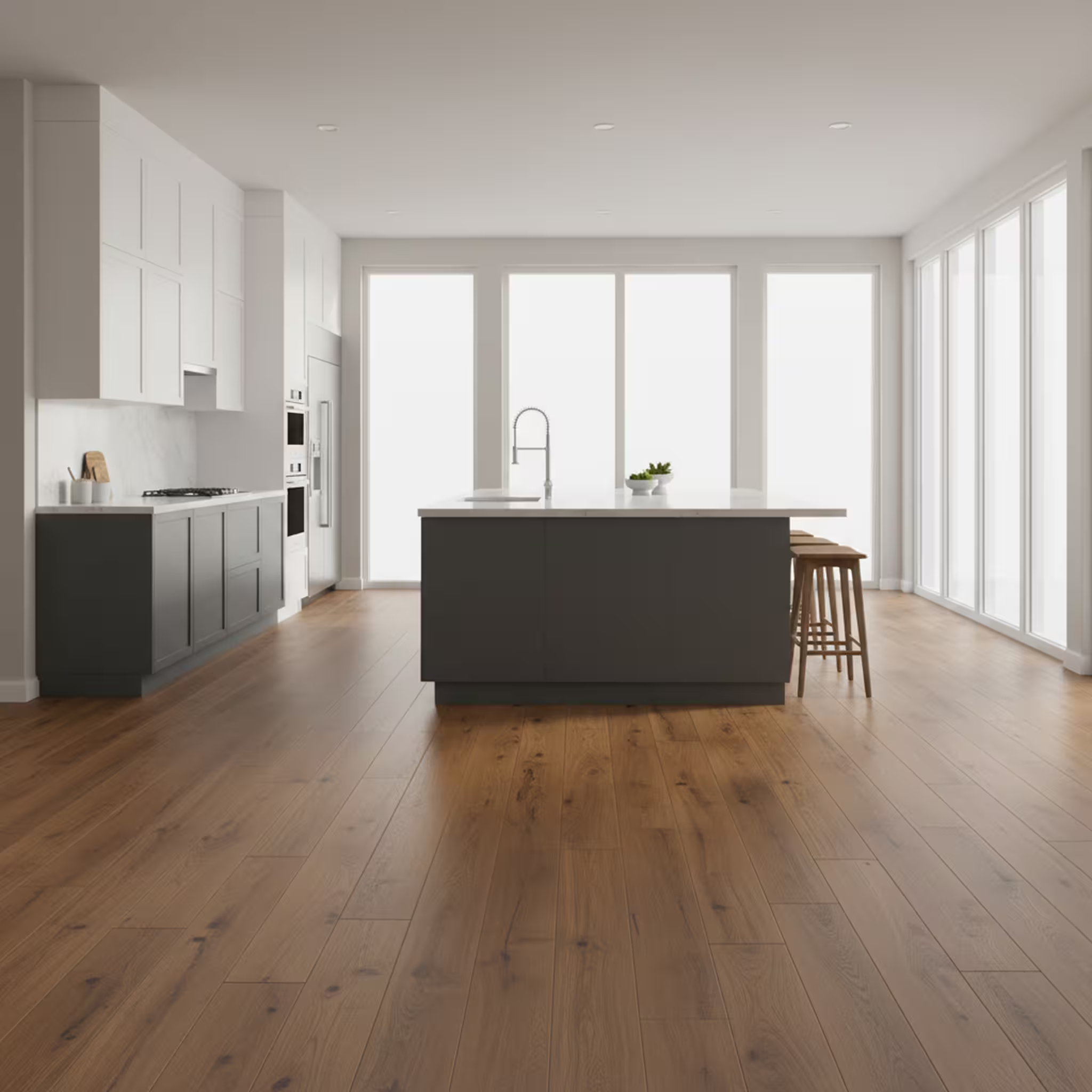
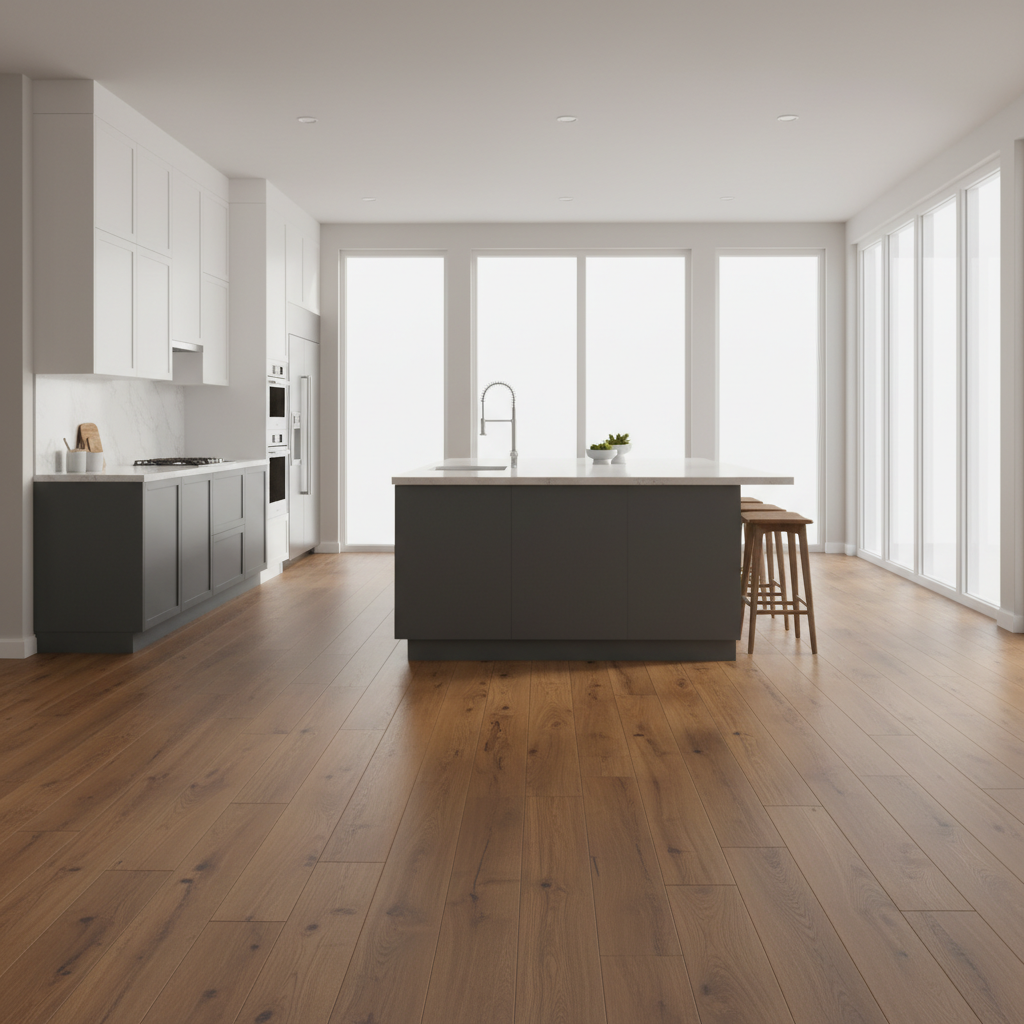
A modern kitchen with continuous wood-look flooring, similar to what you might choose in a main-floor renovation.
Choosing flooring for a busy kitchen or basement often comes down to engineered hardwood vs laminate. Both can give you that warm “wood floor” look, but they behave differently with spills, pets, and moisture. Below, we focus on how each one performs in real Metro Vancouver homes so you can match the right floor to the right room.
TL;DR: engineered hardwood vs laminate at a glance
Quick take:
- Kitchens (main floor): Engineered hardwood for a premium, continuous main-floor look; laminate if you prioritize budget and scratch resistance over resale.
- Basements / ground-level suites: Laminate or, better yet, laminate and vinyl plank are usually safer than real wood unless the space is very dry and well-managed.
In general, use engineered hardwood in dry, main-floor spaces where long-term resale value matters, and lean toward laminate or vinyl plank in moisture-prone basements, rentals, and busy family areas.
What is engineered hardwood? What is laminate?
Engineered hardwood (real wood on top)
Engineered hardwood is a layered wood floor. The top “wear layer” is genuine hardwood (oak, maple, hickory, etc.) bonded to a plywood or high-density core. That construction keeps the planks more stable than solid hardwood when humidity swings — which happens a lot in Metro Vancouver.
Most engineered planks are 3/8"–3/4" thick and can be installed as a floating floor, glued down, or nailed or stapled in place, depending on the subfloor and manufacturer instructions. If the wear layer is thick enough, an engineered wood floor can often be sanded and refinished once or twice, which is a big part of its long-term value on main floors and in kitchens.
Laminate flooring (high-density core with a photo layer)
Laminate uses a high‑density fibreboard core with a printed image layer that looks like wood, stone, or tile, plus a tough protective coating on top. There’s no real wood on the surface, but the look has come a long way in the last decade, especially in products with deep embossing and beveled edges.
The durability of laminate is often described using an AC (abrasion class) rating; higher ratings generally mean better resistance to wear in busy spaces like kitchens, hallways, and rental suites. With the right underlayment and moisture barrier, many choices work well in kitchens and basements. You can learn more about engineered wood construction and best practices from groups like the National Wood Flooring Association.
A simple way to remember it: engineered hardwood is a real-wood floor with a stable core, laminate is a durable picture of wood on a tough core.
Wood floor vs laminate in kitchens
How each handles daily kitchen life
Metro Vancouver kitchens see it all: wet boots, sink splashes, pet water bowls, and the odd mystery drip under the fridge.
- Engineered hardwood in kitchens: Feels warm and solid underfoot, looks fantastic in open layouts, and boosts resale appeal. It shrugs off quick spills if you wipe them up soon, but long-standing puddles can damage boards or stain the finish.
- Laminate flooring in kitchens: Great for busy families and rentals. Many modern laminates are rated as “water-resistant” for a set number of hours, so splashes and small spills are fine if cleaned promptly, but leaks that sit at the joints can still cause swelling or edge damage.
Both engineered hardwood and laminate can create a warm, wood-look surface in busy kitchens.
If you cook a lot, think about how often water sits on your floors. A few drops wiped up quickly are fine for both. Regular sink overflows or a dishwasher that has leaked before tilt the decision toward laminate or even vinyl plank.
Big leaks: dishwashers, fridges, and sinks
Slow leaks from dishwasher or fridge lines usually make boards swell, cup, or stain and need replacement, whether you choose engineered hardwood or laminate.
Best practices for kitchen installations
- Use leak alarms or trays under dishwashers and fridges to catch slow leaks early.
- Add mats in front of sinks and patio doors to catch drips and wet boots.
- Keep felt pads under chairs and stools to reduce scratching on both engineered hardwood and laminate.
- Follow the manufacturer’s guidelines for expansion gaps and underlayment so your new floor can move with seasonal humidity changes.
Real wood vs laminate in basements and suites
Basements and basement suites across Metro Vancouver bring concrete slabs, cool temperatures, and moisture that can sneak in from outside or below.
Engineered hardwood in basements
Engineered hardwood is more stable than solid wood, but it is still a wood floor at heart. In a very dry, well-insulated basement with moisture testing and a proper vapor barrier, it can perform well and add serious warmth and style.
Any risk of seepage, a past flood, or hydrostatic pressure through the slab is a red flag. Once wood absorbs moisture from below, repairs can be expensive and may require removing large sections of flooring.
Laminate in basements
Laminate tends to be more forgiving if the concrete slab is properly covered with a moisture barrier and underlayment. For secondary suites, rec rooms, and home gyms, it balances appearance, budget, and durability quite well.
In many basement situations, we walk homeowners through a three‑way comparison of engineered hardwood and our laminate and vinyl plank, laying out the pros and cons for their specific space. If your home has a history of leaks or flooding, it’s also worth asking about restoration & insurance and other flood service support before you invest in new floors.

A finished basement family room using wood-look laminate flooring for warmth and durability over concrete.
If you’re unsure how damp your slab is, resources from groups like CMHC offer good guidance on moisture and finished basements, but on-site testing with a professional is still the gold standard.
Water, wear, and everyday life
Scratches, dents, and pet claws
- Engineered hardwood: Feels more solid and natural, but the wood surface can dent from dropped pans or heavy furniture. Surface scratches may be touched up, and deeper damage can sometimes be hidden during refinishing if the wear layer is thick enough.
- Laminate: Very good at resisting surface scratches thanks to its hard wear layer and AC-rated durability. Dents are less common, though once the surface is damaged, repairs usually mean replacing boards.

Everyday life with pets and foot traffic is a key test of engineered hardwood vs laminate durability.
Water and humidity swings
In Metro Vancouver, humidity swings with our wet winters and drier heating seasons:
- Engineered hardwood: Built to handle seasonal changes better than solid hardwood, but still needs reasonable indoor humidity. Too dry and boards can gap; too humid and they can swell.
- Laminate: Joints are the weak point. When installed well with the right underlayment, it stays stable, but excessive moisture from below or above can cause edges to rise or swell.
Some laminate lines are tested to industry standards, including surface swell and water-resistance testing set out by groups like the North American Laminate Flooring Association (NALFA). Those ratings are helpful, but they’re not a guarantee against major leaks or flooding.
Maintenance & cleaning: basics
Day-to-day care is similar for both engineered hardwood, laminate, and vinyl plank:
- Do: Sweep or vacuum with a hard-floor attachment, use a slightly damp microfiber mop with a manufacturer-approved cleaner, wipe up spills promptly, and use felt pads under furniture.
- Don’t: Use steam mops, soaking-wet mops, waxes, or harsh chemicals; drag heavy furniture; let pet bowls or plant pots sit directly on the floor; or leave standing water on joints or edges.
Comfort, sound, and resale value
How they feel and sound
On a cold concrete slab, both products rely on underlayment for warmth and noise control, especially in condos with strata sound rules.
- Engineered hardwood: Has that “solid plank” feel many people love and often feels quieter with a quality acoustic underlay.
- Laminate: Feels a bit lighter underfoot; the right underlay softens echo and limits sound transfer for suites and multi‑family buildings.
Perceived value when selling
For resale, real wood still tends to rank higher: buyers often see continuous engineered hardwood on the main floor as a premium upgrade. High‑quality laminate can look great, but many people still place it a notch below “hardwood,” so engineered usually wins if you’re optimizing for first impressions.
Cost comparison: materials and lifetime value
Exact prices shift with product lines, exchange rates, and labour, but neutral Canadian cost guides such as the HomeStars flooring cost guide for Canada show a similar pattern:
- Engineered hardwood: Higher material cost, and installation can be more involved. Over the long run, the ability to refinish once or twice can stretch its life.
- Laminate: Lower to mid-range upfront cost. You can’t refinish it, but replacing a few damaged planks is straightforward for a pro and sometimes even for handy homeowners.
For busy rental suites and basements, laminate or vinyl plank often wins on total cost of ownership because it is affordable to install and relatively inexpensive to repair or replace after tenant turnover. For statement kitchens and main floors, engineered hardwood still earns its keep thanks to its look, feel, and potential lifespan when cared for properly.
How to choose for your home
Here’s a simple way to sort out the hardwood vs laminate decision for kitchens and basements:

Comparing engineered hardwood and laminate samples at home helps you see how each looks in your light.
For your kitchen
- You might lean to engineered hardwood if:
- Your kitchen opens into living or dining rooms and you want one continuous wood floor.
- You plan to stay long-term, care about resale appeal, and like the feel and character of real wood.
- You’re comfortable wiping up spills quickly and using mats in heavy splash zones.
- You might lean to laminate if:
- You’ve got kids, pets, or renters who are hard on floors and you want a tough, scratch-resistant surface that still looks like wood.
- Budget is a major factor and you want to keep upfront costs predictable.
- You’re okay with replacing planks rather than refinishing down the road.
For your basement or ground-level suite
- Lean to laminate (or vinyl plank) if:
- The space has a history of dampness, you’re unsure about the slab, or you want a floor that can be replaced in sections after a minor flood.
- It’s a rental suite or rec room where practicality comes first.
- Consider engineered hardwood only if:
- The basement is finished, dry, has no history of water issues, and you want the warmth and resale appeal of real wood while managing humidity.
- You’re prepared to invest in moisture testing, vapor barriers, and professional installation.
If you’re still stuck, bring a few samples home for a week and see how they handle spills, bare feet, pet claws, and natural light.
When to call a Metro Vancouver flooring pro
Choosing between engineered hardwood and laminate gets easier once you know your moisture levels and how you use the space day to day. You can also browse our project gallery to see how different floors perform in real homes.
At Vantor Flooring, we help homeowners and strata councils across Richmond and the rest of Metro Vancouver compare options for engineered hardwood and our laminate and vinyl plank flooring in real kitchens and basements - not just in brochures.
We can:
- Check your subfloor and look for signs of moisture or past water damage.
- Recommend underlay and installation methods that suit your condo, suite, or single‑family home.
- Show you side‑by‑side samples so you can see how real wood vs laminate compares in your lighting.
Request a free estimate and we’ll walk you through the options, room by room, so you can feel good about the floor under your feet for years to come.
FAQ: Engineered hardwood vs laminate for kitchens and basements
Is engineered hardwood OK for condos and strata properties?
In many Metro Vancouver condos and strata properties, engineered hardwood is allowed as long as you follow the rules. Typically that means using an approved acoustic underlay, meeting minimum sound ratings, and sometimes submitting samples or product data for review before installation. Always check your bylaws and get written approval before you start.
Are modern laminates waterproof?
Most modern laminates are marketed as “water-resistant,” not truly waterproof. That usually means they can handle everyday spills for a certain number of hours, but they are not designed to sit in standing water from a dishwasher flood or burst pipe. For areas with higher water risk — like basement suites, entryways, and around laundry machines — many homeowners opt for laminate in drier zones and switch to vinyl plank or tile where leaks are more likely.
Do I need a vapor barrier over concrete?
For floating floors like laminate and many engineered hardwood systems installed over concrete, a vapor barrier or moisture-rated underlayment is usually recommended and often required by the manufacturer. It helps shield the flooring from moisture that can migrate up through the slab. The exact product (separate poly sheet vs. built-in moisture barrier in the underlay) depends on your flooring choice and slab conditions, so it’s worth having a flooring pro test the concrete and confirm the right approach.
