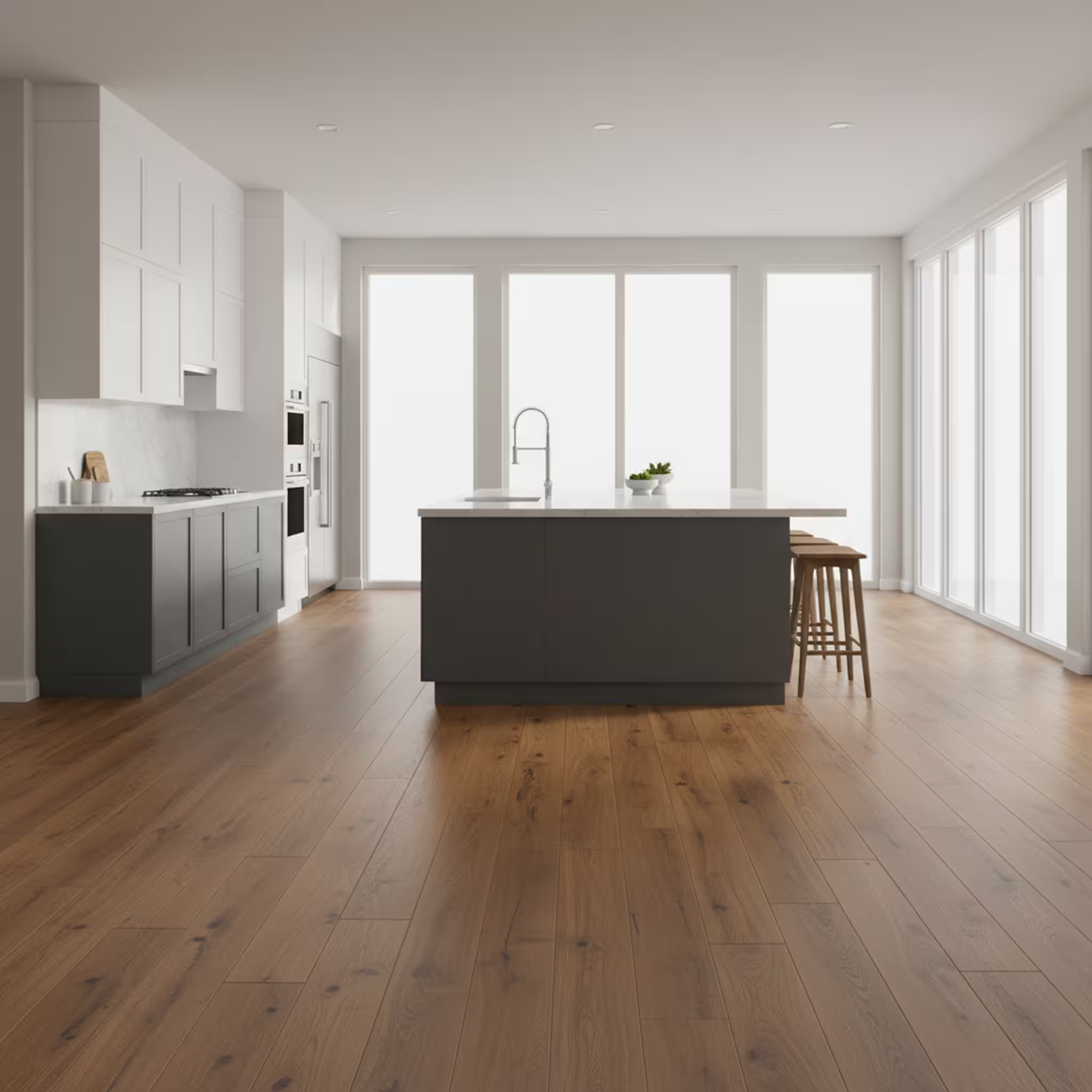

Warm, mid-tone wood-look planks in open-concept kitchens and living rooms are at the heart of 2026 flooring trends.
When clients ask us about flooring trends 2026, they’re really asking two things: what looks fresh right now, and what will still feel right when the paint chips on the kids’ hockey sticks finally dry out in the mudroom. Floors set the tone for your whole home, especially in open-concept kitchens and living rooms that see constant action.
The short version? Designers are staying practical, but they’re having more fun again. Warm wood tones are replacing cool grays, planks are getting wider, and classic patterns like herringbone and checkerboard are back - just softer and more grown-up than the high-contrast versions from a decade ago.
From our Richmond showroom to condo corridors in Burnaby and family homes in Surrey, we see what Metro Vancouver homeowners actually install, not just what trends on Instagram. Below, we’ll walk through the colors, plank sizes, and patterns designers lean on most for 2026 kitchens and living spaces - plus how to pick the right combo for your own home.
TL;DR: 2026 flooring at a glance
- Warm, mid-tone woods and stone-look floors are the new go-to neutrals.
- Wide planks (often 7"–9") and longer boards help small rooms feel larger and calmer.
- Patterns like herringbone and checkerboard are back, but in soft, tonal palettes.
- In busy kitchens and basements, waterproof luxury vinyl plank does the heavy lifting.
1. Warm floor colors are replacing cool gray
For years, cool gray floors were everywhere. In 2026, designers are leaning into warmer, grounded tones that suit our cloudy West Coast light far better. Think:
- Soft blonde and honey oaks that pair nicely with white or light taupe walls.
- Mid-tone browns with a hint of caramel, not red or orange.
- “Greige” tones that mix a little gray into beige for flexibility with existing furniture.
- Stone looks in warm limestone or sandstone instead of icy concrete.
That shift isn’t just local. The 2024 U.S. Houzz Kitchen Trends Study found that wood-tone flooring appears in 56% of renovated kitchens, while gray floors have dropped to 12% and beige to 8% as homeowners move toward warmer, more natural looks. Houzz expects wood tones to keep leading kitchen flooring choices for the next few years.

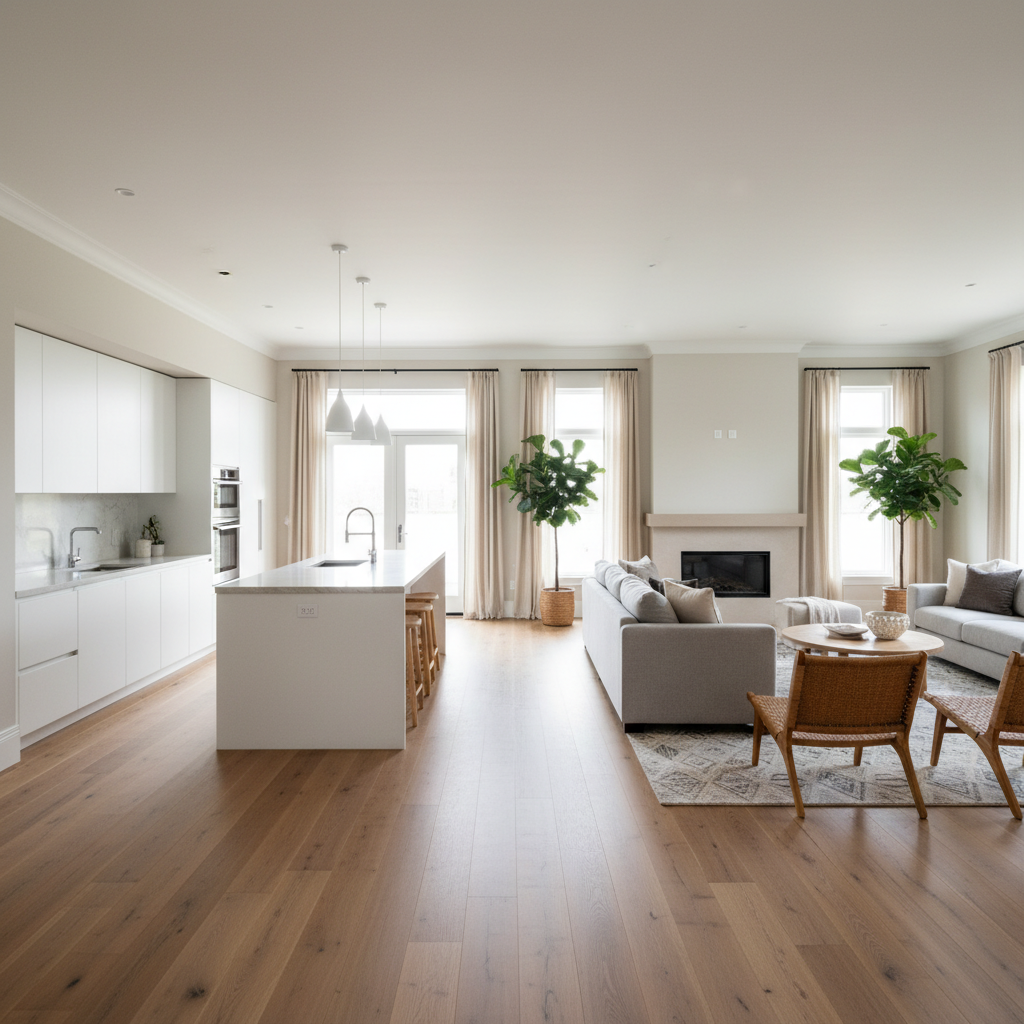
Warm wood and wood-look floors paired with creamy cabinets and soft metal hardware define many 2026 kitchen renovations.
One of our favourite shifts in Metro Vancouver kitchens is the combo of warm wood-look LVP with creamy off-white cabinets and soft brass hardware. It feels current, but not so trendy that you’ll be repainting everything by 2029.
Best floor colors for modern kitchens
In 2026 kitchen remodels, floors usually land in one of three “zones”:
- Light and warm — blonde oak or light limestone that keeps a small kitchen airy.
- Soft mid-tone — the sweet spot for hiding crumbs and paw prints.
- Deep and cozy — rich brown planks paired with lighter cabinets for contrast.
If your kitchen doesn’t get much natural light (hello, north-facing townhomes), a warm light or mid-tone floor helps the space feel more inviting on those rainy Richmond afternoons.
Living rooms that feel grounded, not gloomy
In living rooms, we see many homeowners shifting from almost-black floors to softer browns and natural oaks. Dark floors can look beautiful, but they show every speck of dust. A mid-tone engineered oak or laminate gives you that “designed” look while being far more forgiving day-to-day.
Warm, low-contrast floors are becoming the new “white walls”—a calm backdrop that lets your furniture and art do the talking.
2. Top flooring materials designers are picking in 2026
Colour is only half the story. If you’re cooking, working, and hosting in the same open space, the material underfoot matters just as much. Industry trend reports and what we see in Metro Vancouver homes line up pretty well:
- Engineered hardwood — Still the “forever floor” for many living rooms and main floors. It handles seasonal humidity better than solid hardwood and works with radiant heat when installed properly. Learn more from the National Wood Flooring Association.
- Luxury vinyl plank (LVP) and tile (LVT) — The workhorse in busy kitchens, condos, and basements. Modern LVP looks shockingly close to real wood or stone and stands up well to pets, kids, and wet boots.
- Water-resistant laminate — Better visuals and better moisture resistance than the laminate many of us grew up with, often at a lower price than premium LVP.
- Porcelain tile and stone — Especially in kitchens, entries, and on main-floor slabs. Large-format tiles that mimic limestone or concrete are a big part of 2026 design boards.
Industry data backs this up. In the National Kitchen & Bath Association’s 2026 Kitchen Trends Report, 94% of design professionals said wood flooring is the most popular option in today’s kitchens, with luxury vinyl and engineered wood also ranking among the top choices. NKBA notes that clients are drawn to these materials for their mix of warmth, durability, and long-term value.
For many Metro Vancouver families, a smart combo is engineered hardwood or laminate in the living room, and matching wood-look LVP in the kitchen for extra water resistance where spills happen.
3. Wide planks and long runs make rooms feel bigger
If there’s one plank trend designers agree on for 2026, it’s this: go wider. Six- to nine-inch planks are now standard in many new builds and renovations, and they’re showing up in everything from English-style kitchens to sleek condos.
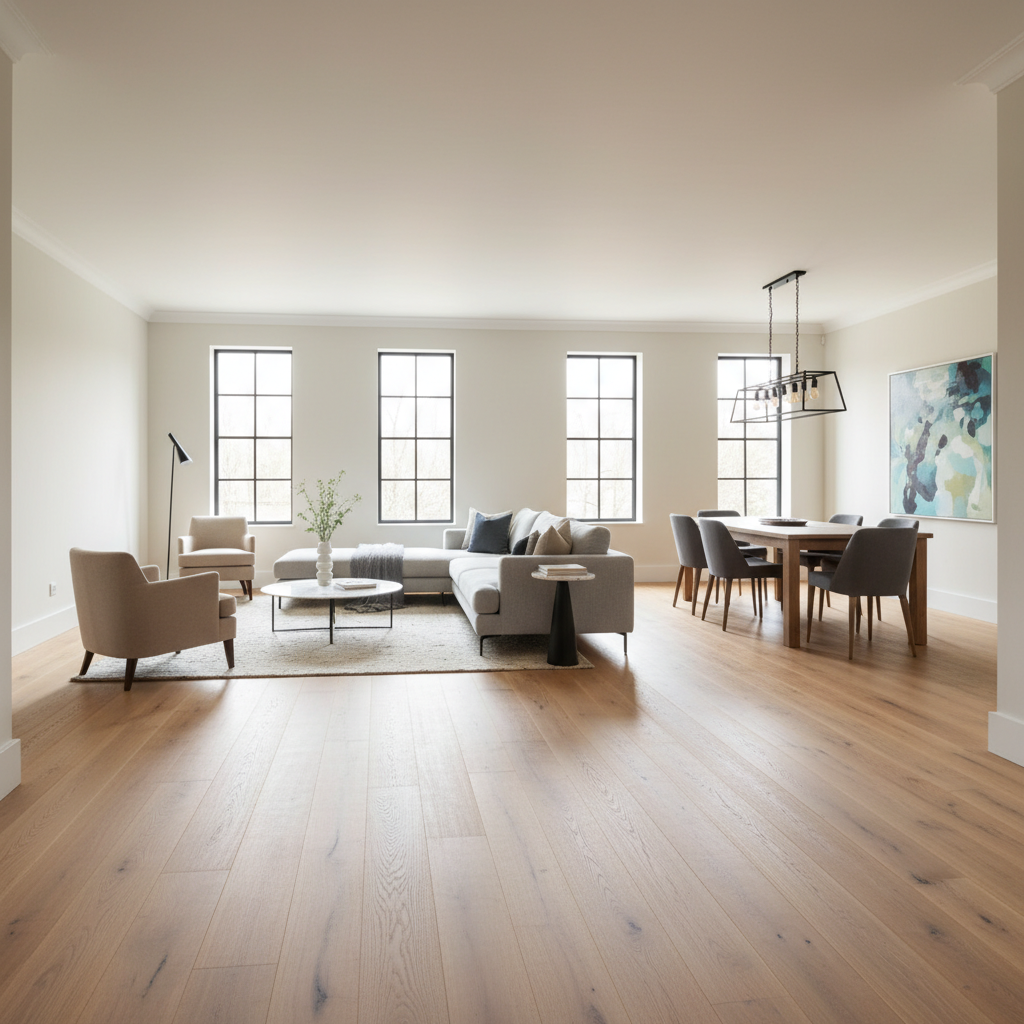
Extra-wide planks and long, uninterrupted runs help 2026 living and dining spaces feel larger and calmer.
Why the obsession with wide planks?
- Fewer seams mean a calmer, cleaner look, especially in open-concept spaces.
- They show off wood grain beautifully, even on high-quality vinyl plank.
- In narrow condo layouts, running long planks along the longest wall helps the whole space feel wider.
What width should you choose?
As a starting point:
- 5"–6.5" — Great for smaller rooms or if you’re worried about going too bold.
- 7"–9" — The sweet spot for most main floors and large living rooms in 2026.
- Mixed widths — A more heritage feel, especially in character homes and farmhouse-inspired spaces.
Direction matters too. In many Metro Vancouver townhomes, we recommend running planks from the front window straight through to the back kitchen. That uninterrupted line makes your living, dining, and kitchen feel like one generous room instead of three smaller ones.
4. Patterns that feel fresh, not fussy
Patterned floors are officially back, but they’re smarter this time around. Instead of loud, high-contrast designs, 2026 patterns lean classic and tonal — they add interest without shouting over the rest of the room.
Herringbone and chevron in kitchens and living rooms
Herringbone oak floors are everywhere in designer projects right now, especially in European-inspired kitchens and formal living rooms. You can get the look in:
- Engineered hardwood herringbone for a truly timeless investment.
- Herringbone-pattern LVP or laminate that snaps together in a repeating pattern for easier installation.

Classic herringbone patterns in warm, tonal palettes are a favourite 2026 way to add character without overwhelming a room.
Don’t want your entire main floor in herringbone? A smart compromise is to use it on a feature area — for example, just in the kitchen or only in the entry — and run straight planks elsewhere.
Checkerboard floors with a 2026 twist
Checkerboard tile is having a full moment again, but the 2026 version is softer:
- Warm white and clay instead of stark black and white.
- Sage and cream in cosy, “burrowcore”-style kitchens.
- Soft charcoal and limestone for classic entries and mudrooms.
A painted checkerboard on existing wood floors can also be a budget-friendly way to revive an older kitchen or sunroom. Close-up, you see the hand-painted brush strokes; from across the room, it just feels charming and intentional.
Quick question: which flooring patterns work best in small spaces?
In compact kitchens or condos, keep the pattern scale medium and the color contrast gentle. A tiny, busy tile can make a small room feel cluttered, while a mid-scale pattern in two close colours keeps things playful but calm.
5. Mixing materials between kitchens and living spaces
Instead of one floor from the front door to the back patio, 2026 homes often mix materials in a way that still feels cohesive. Designers are especially fond of:
- Tile “rugs” in kitchens — A stone- or terrazzo-look tile inset under the island and cooking zone, surrounded by wood or wood-look planks in the rest of the space.
- Stone or porcelain in entries — A practical spot for umbrellas, muddy dogs, and ski gear, then a flush transition to warm wood in the adjoining living room.
- Indoor-outdoor flow — Large-format porcelain that continues visually from the kitchen or living room out onto a covered patio.
The key is to keep undertones aligned. If your kitchen “rug” tile is a warm limestone look, choose hardwood or LVP with a similar warmth rather than a blue-gray plank that fights with it. The National Kitchen & Bath Association has been talking about this kind of material harmony for several trend cycles now, and it’s sticking around for 2026.
6. Comfort underfoot: carpet, runners, and layered rugs
Hard surfaces still rule main floors, but wall-to-wall carpet is quietly making a comeback where comfort matters most: bedrooms, basements, and media rooms.
- Textured neutrals like subtle patterns and cut-and-loop designs hide footprints and vacuum lines.
- Warm tones in oatmeal, mushroom, and soft camel add that “hotel room” feeling when you step out of bed.
- Stair runners add grip and reduce noise, which condo owners and parents both appreciate.
For main-floor living rooms, the 2026 look is hard surface plus a generously sized area rug. Designers love vintage and vintage-inspired rugs layered over oak or LVP because they soften acoustics and visually “anchor” the sofa zone. When you’re choosing carpet or rugs, look for low-VOC options and certifications like Green Label Plus if indoor air quality is a big priority.
7. How to choose the right 2026 flooring look for your home: The 5-Step Vantor Flooring Fit Method
Trend lists are fun, but your floor still has to survive real life: dripping umbrellas, hockey bags, visiting grandkids, and the occasional red wine mishap. Here’s how we walk Metro Vancouver homeowners through the decision using our 5-Step Vantor Flooring Fit Method in our flooring consultations.
Step 1: Start with the room, not the sample
- Kitchens and entryways need serious moisture resistance. LVP or tile usually wins here.
- Living and dining rooms can handle engineered hardwood, laminate, or LVP depending on lifestyle and budget.
- Basements do best with products made for potential moisture, like vinyl or certain laminates.
Step 2: Pick your base tone
Decide if you’re a light, medium, or dark floor household. Lay samples next to your existing or planned cabinets and sofa. If everything feels a bit flat, try a slightly warmer or deeper floor colour rather than jumping to a whole new style.
Step 3: Decide if the floor is a backdrop or a feature
Love bold cabinet colours or a strong stone countertop? Keep your floor quieter — wide planks in a simple pattern with gentle variation. Prefer cleaner cabinets? This might be your moment for herringbone in the living room or a soft checkerboard in the kitchen.
Step 4: Test samples in real Metro Vancouver light
We always tell clients: move your samples around for a few days. Morning north light in Vancouver can make a floor look cooler; evening light in Richmond or Surrey warms everything up. What looks beige in the showroom might read almost gray at home, and vice versa.
Step 5: Get a second opinion from a pro
A quick chat with a flooring consultant who installs in local homes every week can save you from costly do-overs. At Vantor Flooring, we bring larger samples to your space, talk through strata rules, and map out how plank direction and transitions will actually look with your walls and furniture.
For example, a recent Richmond townhouse client was torn between a cool gray plank and a warm mid-tone oak look for their north-facing main floor. Walking through the 5-Step Vantor Flooring Fit Method and testing full-size samples in their space made the choice clear: the warm oak LVP brightened the kitchen–living area, hid daily crumbs and pet hair, and tied in beautifully with their existing furniture.
Ready to see these 2026 flooring ideas in your own kitchen or living room? Request a free estimate and we’ll help you narrow the options to a few great choices that fit your style, budget, and day-to-day life.
Key Takeaways
- Warm, mid-tone wood and stone looks are replacing cool gray floors across Metro Vancouver.
- Wider planks and longer boards create calm, open-feeling kitchens and living rooms.
- Classic patterns like herringbone and checkerboard are back in softer, more livable colour palettes.
- Engineered hardwood, LVP, and large-format tile remain the top choices for high-traffic spaces, with carpet returning in bedrooms and basements.
- Use the 5-Step Vantor Flooring Fit Method: start with the room, choose a base tone, decide if the floor is a backdrop or a feature, test samples in your natural light, then confirm choices with a local flooring pro.
- The best “trend” is the one that still feels right for your family in ten years - samples at home and expert guidance make that decision much easier.